
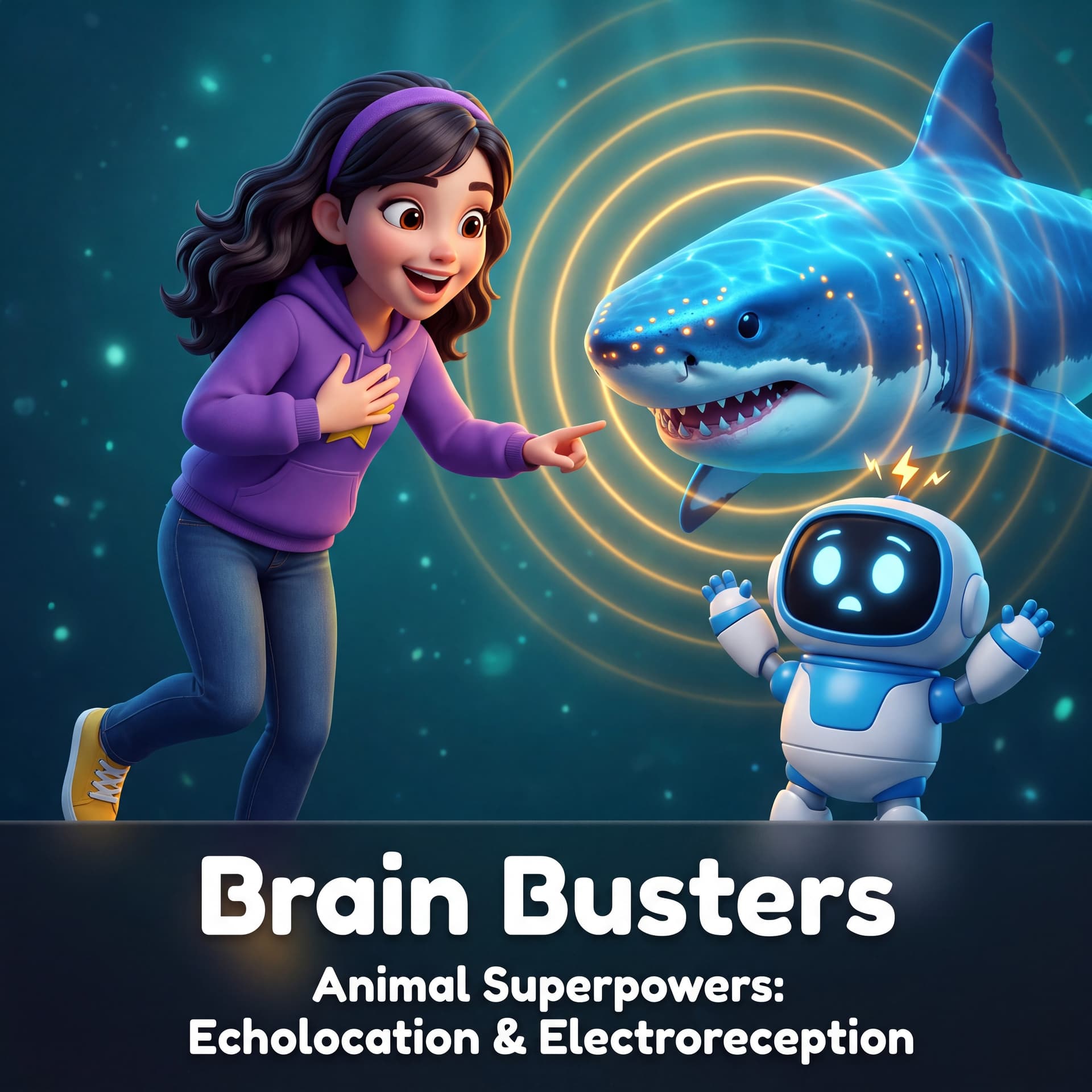
Animal Superpowers: Echolocation and Electroreception Explained
What You’ll Discover
- Bats are not blind they use echolocation as a second navigation system alongside their vision, and one little brown bat can catch close to a thousand insects in a single hour using sound alone.
- Sharks have jelly-filled pores in their snouts called the ampullae of Lorenzini that detect the tiny electrical signals produced by a prey animal's heartbeat and muscle movements, even through sand.
- Dolphins focus their echolocation clicks using a specialised fat organ in their forehead that scientists officially named 'the melon.'
- The platypus hunts entirely by electroreception, diving underwater with eyes, ears, and nose all sealed shut, navigating by the electric fields of its prey.
- Some blind humans learn to use echolocation, making sharp tongue-clicks and reading the returning echoes well enough to hike, navigate buildings, and ride a bicycle.
In this episode of The Brain Bus: Brain Busters, kids aged 8-10 discover that bats aren't blind, that a shark can feel a fish's heartbeat through sand, and that dolphins navigate using a fat organ in their forehead officially named 'the melon.' Each episode runs approximately 25 minutes, long enough to cover serious ground, short enough for a single leg of most drives. This episode of The Brain Bus: Brain Busters explores the real science behind animal senses that go far beyond anything humans can perceive, echolocation in bats, dolphins, and sperm whales; electroreception in sharks, platypuses, and electric eels; and even the surprisingly real evidence that some flowers send electrical signals to bees. If you've been looking for a kids science podcast for ages 8-10 that treats children as capable of handling genuine science, this episode is a strong example of what this feed does. Kids don't just hear facts they work through a six-question quiz, complete a listening Road Challenge in the car, and sit with a genuinely philosophical question: what would it be like to sense a world layered over the one we can already perceive? For parents who've been searching for a family trivia podcast with road trip pacing, the structure here moves from curiosity hook to deep content to quiz to activity without ever feeling rushed.
Chapters
Tap any chapter to jump straight to that part of the episode.