What You’ll Discover
- Perseus defeated Medusa not by brute strength but by using his bronze shield as a mirror - so he never had to look her in the eyes directly
- The Hydra grew two heads back every time it loses one, and Heracles had to figure it out to stop the regrowth
- King Midas's golden touch turned his food and water to gold - the Greeks used that story to show that getting every wish can go badly wrong
- Pandora's jar released all the world's troubles, but hope stayed behind at the very bottom
- Pegasus and Heracles are both named as real star patterns visible in the night sky, and Melbourne is home to one of the largest Greek communities outside Greece itself
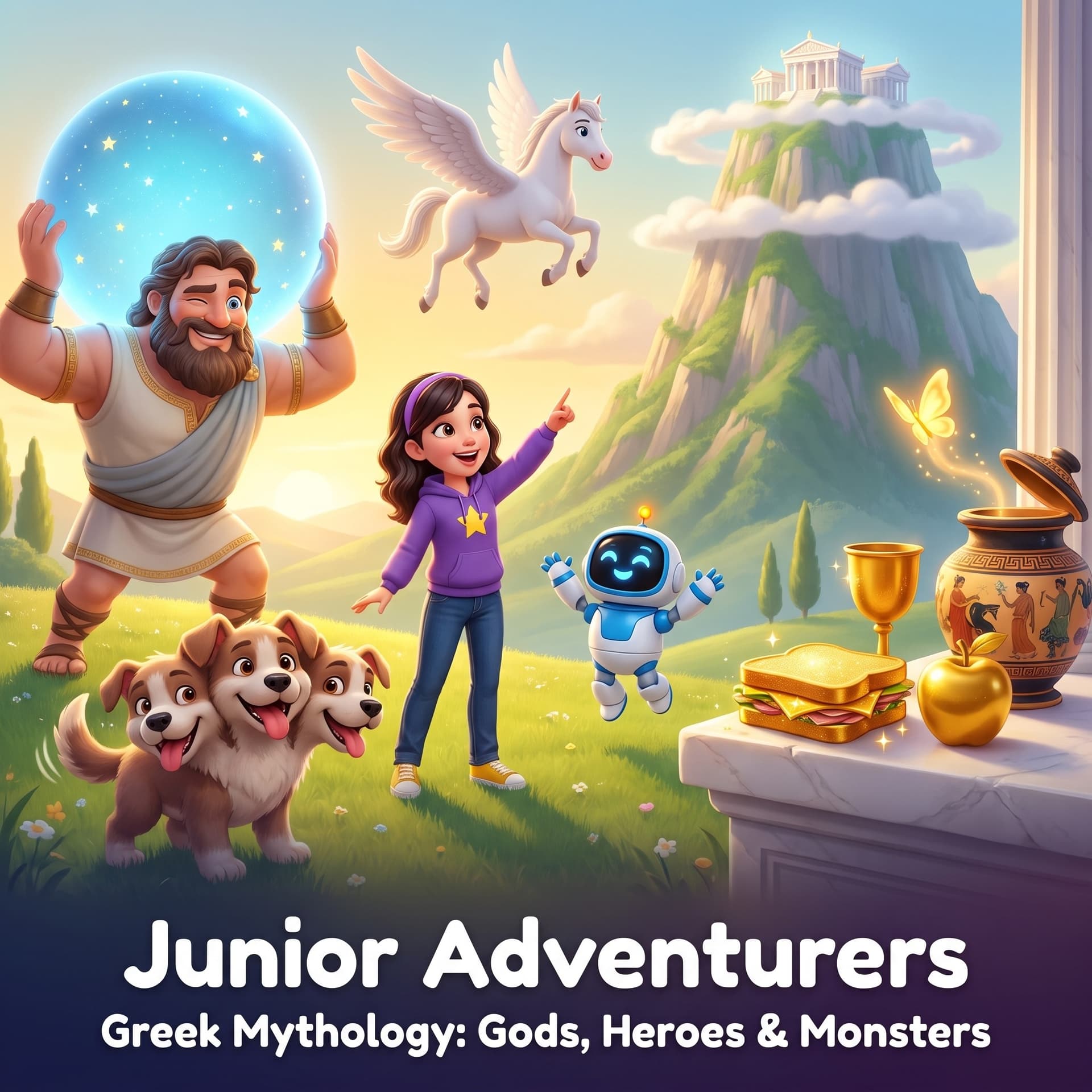
In this episode of The Brain Bus: Junior Adventurers, kids aged 5–7 discover why the Medusa story is really about cleverness beating fear, how a wish for gold became the worst lunch in history, and why a jar full of troubles still held hope at the bottom. It runs about 15 minutes - long enough to settle a restless back seat, short enough to fit a fuel stop. Your child travels back to Ancient Greece alongside Nova and robot co-pilot Cosmo to meet the gods of Mount Olympus, outwit Medusa with a shield-mirror trick, survive the Hydra's regrowth problem, and discover what was left inside Pandora's jar after everything else escaped. Perfect as a screen-free car ride activity, this episode works as a gentle introduction to classical stories that still echo through books, films, and star maps today. Kids are prompted to shout quiz answers out loud, invent their own mythological monster, and wrestle with a wondering question about why ancient storytellers built creatures from mixed-up real animals. As a podcast for 6 year olds and their siblings, it layers in pronunciation guides, Australian connections, and a Cosmo-versus-ambrosia-salad moment that tends to get the whole car laughing.
Chapters
Tap any chapter to jump straight to that part of the episode.