
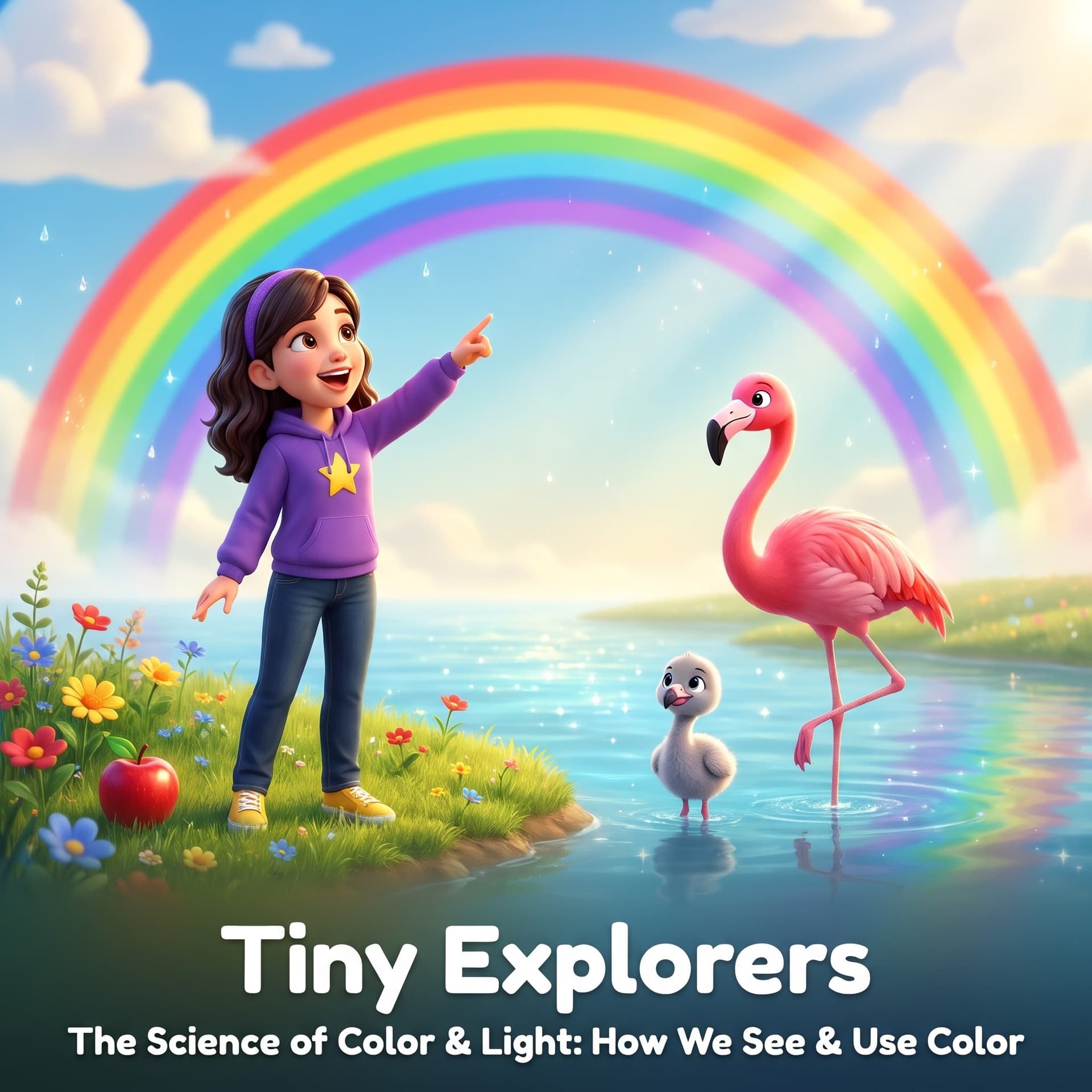
What You’ll Discover
- Colours come from light bouncing off objects into our eyes - not from anything inside the object itself
- In complete darkness there are no colours, only grey, because there is no light to bounce
- White sunlight contains every colour, and raindrops split it into the red-orange-yellow-green-blue-violet arc we call a rainbow
- Flamingos are born grey and turn pink gradually from eating tiny shrimp
- Bees can see ultraviolet light - a colour humans cannot see - which reveals hidden patterns on flowers
In this episode of The Brain Bus: Tiny Explorers, your toddler discovers that colours are not hiding inside objects - they come entirely from light bouncing into our eyes. Built for ages 2–4 and running about 12 minutes, it's the kind of quiet, screen-free listening that leaves little brains genuinely buzzing. Nova guides toddlers through the science of colour in language a two-year-old can follow: why a red apple looks red, why the sky is blue, and how raindrops split white sunlight into a rainbow. Children join an eyes-open, eyes-closed Road Challenge that lets them physically switch colours on and off from the back seat. Along the way they meet Holi - the South Asian festival of colour powder - and learn the surprising reason flamingos are pink (spoiler: it's the shrimp). A gentle, screen-free quiet time episode that works equally well as a toddler podcast for car rides or winding down at home.
Chapters
Tap any chapter to jump straight to that part of the episode.