
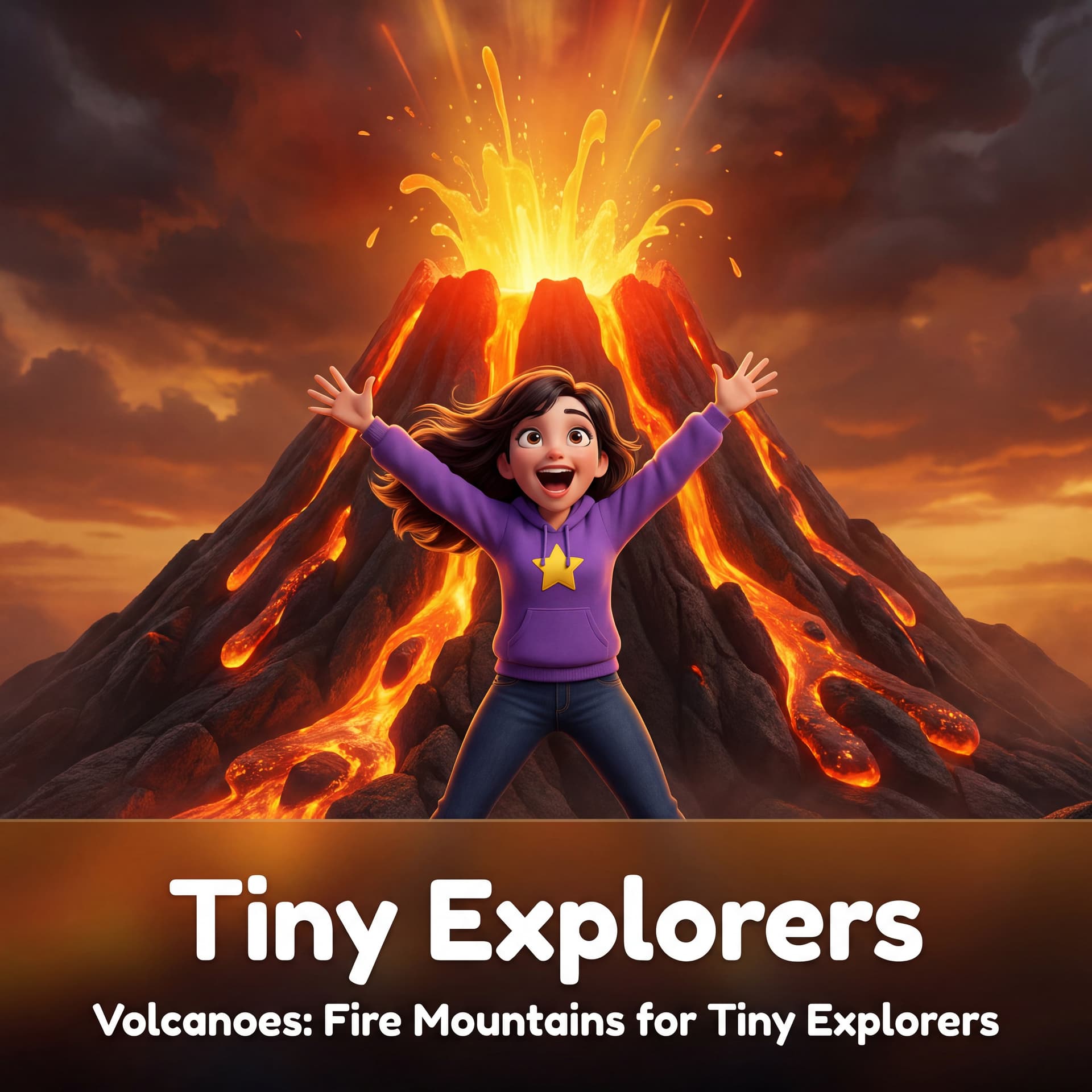
What You’ll Discover
- The ground beneath us has a hard outer shell, and underneath it the rock gets so hot it melts into a runny liquid called magma
- When magma pushes up through a volcano and bursts out the top, it is called lava and lava glows orange and yellow like fire
- Lava flows slowly, cools into solid black rock, and that is how new land including islands in the ocean is created
- The Native Hawaiian people have a story about Pele, the goddess of volcanoes, who made her home inside Kīlauea and is said to be building new land with every eruption
- Some black sand beaches are made from lava that cooled into tiny grains over thousands of years
In this episode of The Brain Bus: Tiny Explorers, children aged 2–4 discover what a volcano actually is. From the hot melted rock hiding underground all the way to the moment lava cools into a new island. Nova explains magma, lava, and how volcanic islands form using comparisons your toddler already knows: melting ice cream, squeezing toothpaste, and honey dripping off a spoon. Each episode runs around 15 minutes. Short enough for a suburb hop, long enough for the highway. Your child will travel with Nova to a 'mountain that sneezes hot, melty rock' - learning the words magma and lava, and understanding why volcanoes erupt through gentle, playful analogies. A respectfully told story from the Native Hawaiian tradition introduces the volcano goddess Pele and explains how Kīlauea has been building the Hawaiian islands for generations. This toddler podcast episode also includes a breathing road challenge where little ones pretend to be erupting volcanoes, making it a natural fit for screen-free quiet time on long drives. Designed as a podcast for 2 year olds and up, the pacing is unhurried, with built-in pauses for tiny voices to call out answers.
Chapters
Tap any chapter to jump straight to that part of the episode.