
What You’ll Discover
- Whales are mammals whose four-legged ancestors walked on land - and tiny leg bones are still found inside whale bodies today
- The ocean holds up a whale's weight the same way water lets you lift a friend you couldn't carry on land, which is why blue whales can outgrow every dinosaur
- A blue whale's heart slows to around two beats per minute during a deep dive to conserve oxygen
- Orcas are actually the largest dolphins on Earth, and at Twofold Bay in New South Wales they cooperated with Yuin nation hunters across generations - one orca's skeleton, Old Tom, is still at the Eden Killer Whale Museum
- Dolphins give each other individual whistle-names, and bowhead whales can live over 200 years - some alive today predate their great-great-great-grandparents
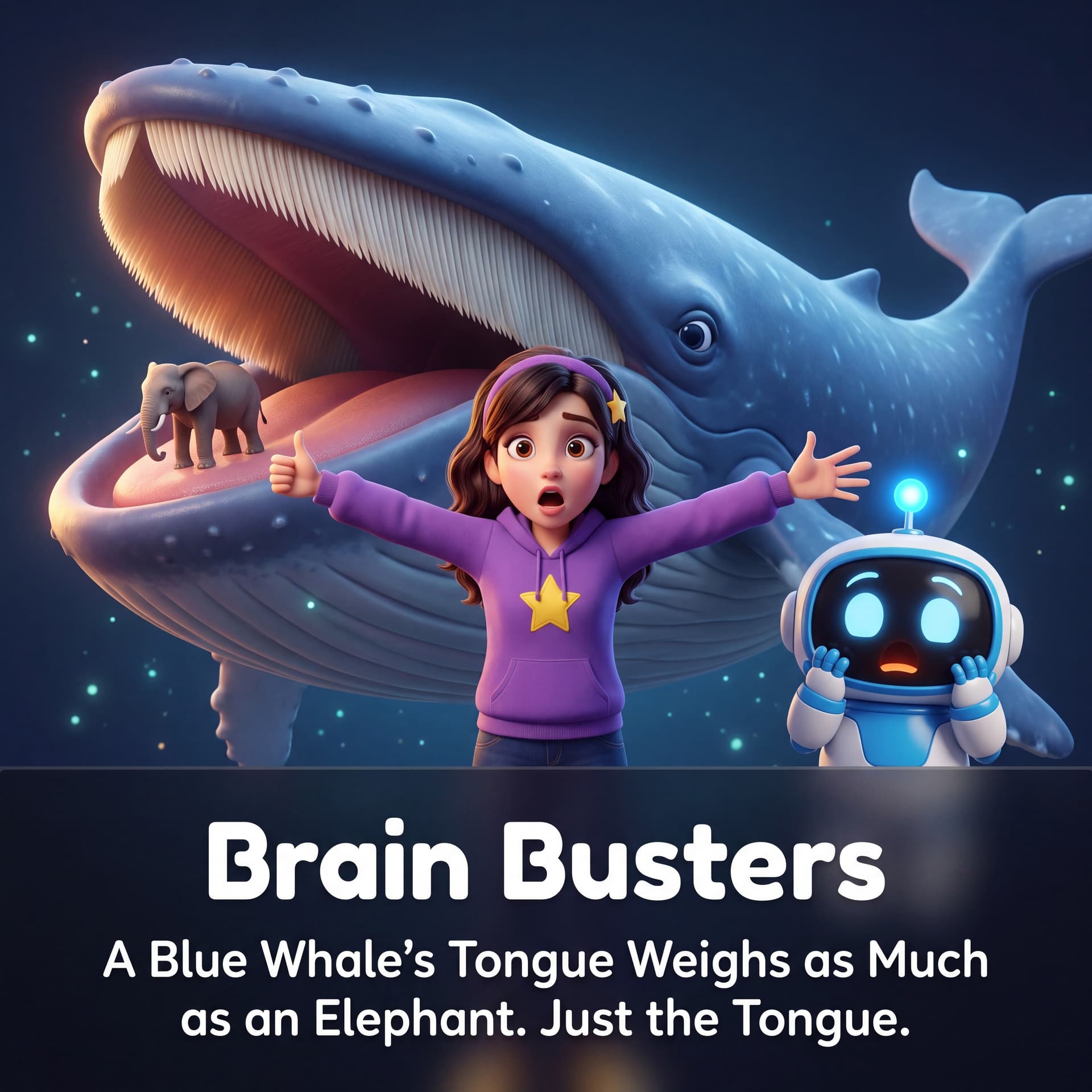
In this episode of Brain Busters, kids discover that the blue whale - the largest animal in Earth's history - survives almost entirely on krill smaller than a human thumb, and that orcas are actually dolphins who passed hunting knowledge down across generations with real Australian people at Twofold Bay. Brain Busters is designed for ages 8–10 and this episode runs around 20 minutes. It's the kind of episode that tends to generate questions well after the drive ends. Nova guides Explorers through the science of why ocean physics lets whales grow bigger than any dinosaur, how sperm whales hunt in total darkness using echolocation, and what it means that humpback whale songs travel thousands of kilometres across the Pacific like underwater hit singles. This kids science podcast episode for ages 8–10 weaves in the real history of orcas cooperating with Yuin nation hunters at Twofold Bay - a story with a skeleton you can still visit today. As a family trivia podcast perfect for road trips, it closes with a listening challenge that turns the car itself into an experiment in echolocation thinking.
Chapters
Tap any chapter to jump straight to that part of the episode.